Car insurance in Nepal isn’t just about following the law—it’s about protecting yourself and your wallet. Accidents, theft, and natural disasters can happen at any time, and insurance ensures you’re not left paying the full cost. At a minimum, third-party insurance is mandatory and covers injuries or damages you might cause to others.
This guide breaks down everything you need to know: policy types, legal requirements, premium factors, claims, and practical tips. Whether you drive a budget-friendly car or a high-end vehicle, you’ll be ready to pick the plan that makes sense—and keeps you covered.
What is the Condition of Car Insurance in Nepal?
Car insurance in Nepal is more than a piece of paper—it’s a promise. You pay a premium, and the insurer steps in if your car is damaged, stolen, or you’re liable for someone else’s injuries. In Nepal, motor insurance is a big deal, accounting for a significant share of the country’s non-life insurance market.
The Nepal Insurance Authority keeps the system in check, making sure insurers follow the rules, set fair prices, and handle claims properly. With traffic growing every day, especially in Kathmandu, having insurance isn’t just smart—it’s necessary to protect yourself and others from unexpected costs.
More drivers are catching on, but many still stick to minimal coverage. They think a basic policy is enough, leaving themselves exposed rather than opting for a comprehensive plan that would actually shield them from bigger losses.
Legal Requirements for Car Insurance in Nepal
Do you really know the legal requirements for car insurance in Nepal?
In Nepal, car insurance is not optional; it’s the law. Under the Motor Vehicles and Transport Management Act, every vehicle on the road must have third-party liability insurance. Skip it, and you’re risking fines, legal trouble, and even problems renewing your blue book.
Mandatory Third-Party Insurance
Third-party insurance isn’t fancy, but it does its job. It ensures someone else is taken care of if your car injures them or damages their property. What it doesn’t cover? Your own car, theft, fire, or natural disasters. Driving without it? That’s asking for trouble.
It covers:
- Injury or death of a third party
- Damage to third-party property
- Legal compensation costs
It does not cover:
- Damage to your own car
- Natural disaster damage
- Theft or Fire
Driving without valid insurance may result in fines, penalties, or the rejection of the vehicle registration.
Documents Required for Car Insurance in Nepal
When buying, renewing, or claiming car insurance in Nepal, you need the right documents. These papers help insurers verify the owner’s identity, vehicle ownership, car details, and policy details. Showing up without proper documentation and preparation will slow down the process, or your claim may even be rejected.
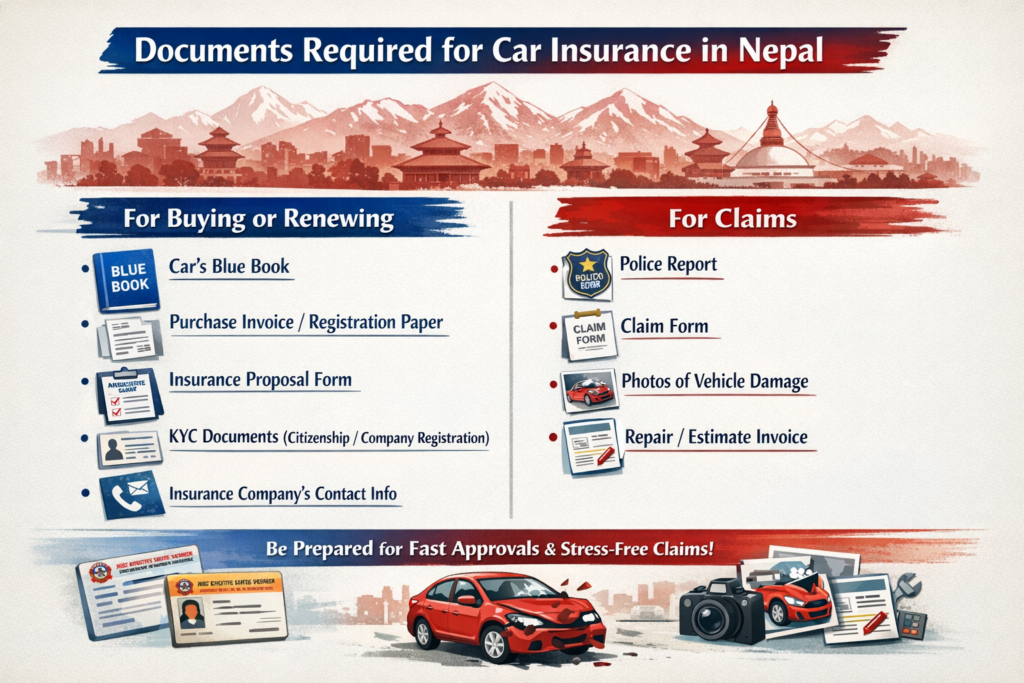
For buying or renewing, make sure you have:
- A copy of your car’s blue book
- Car purchase invoice or registration details
- Completed insurance proposal form
- KYC documents (citizenship or company registration)
- Updated the contact information of the insurance company
For claims, you’ll need:
- Police report (if required for accidents or theft)
- Completed claim form provided by the insurer
- Clear photos showing the vehicle damage
- Workshop repair or replacement estimate
Simpler prep means faster approvals and less stress.
Types of Car Insurance in Nepal
Car insurance in Nepal comes in layers. Pick what fits your car, your budget, and your peace of mind.
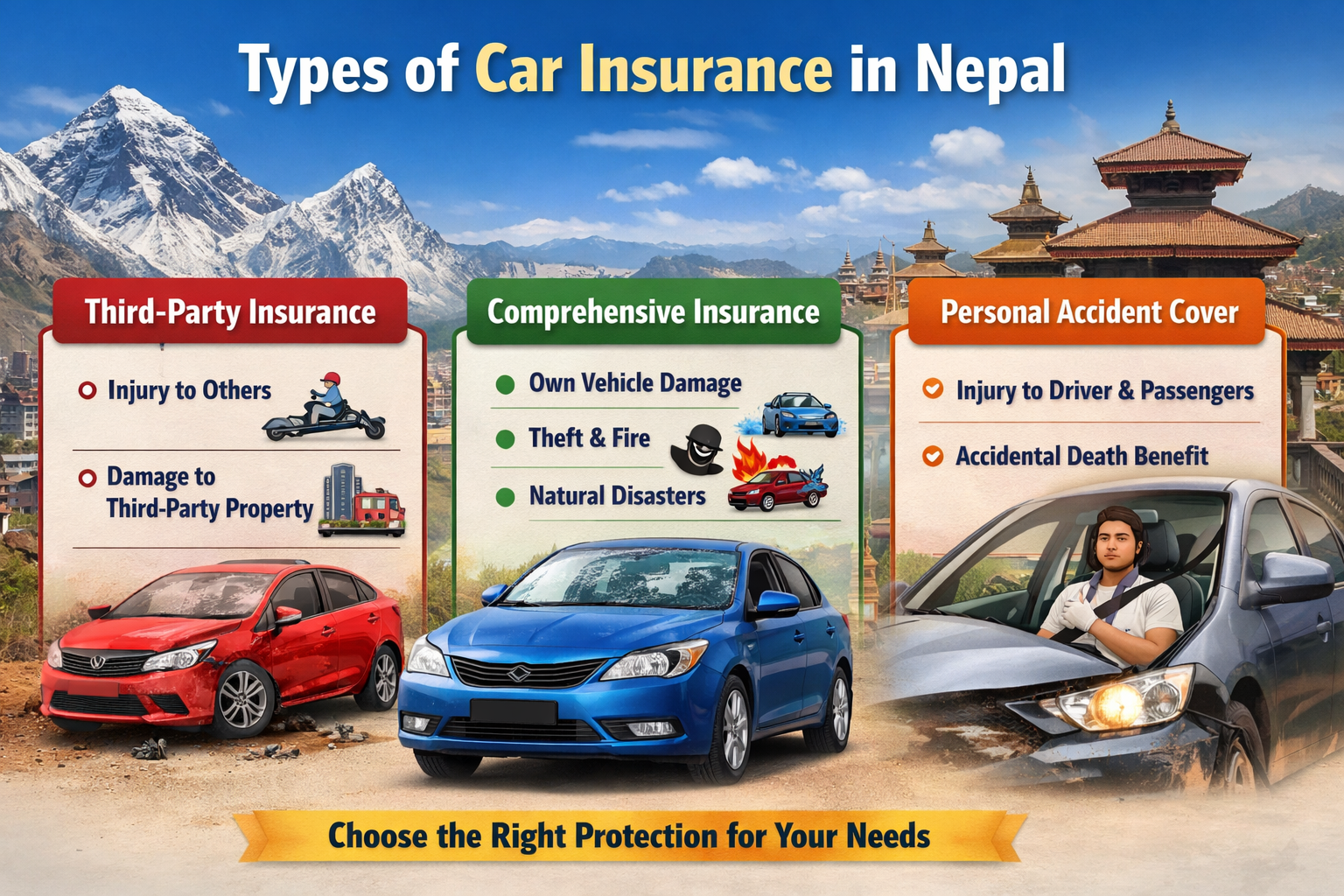
Third-Party Car Insurance
This is the most basic, legally required coverage. It protects others against injuries or property damage during accidents, not you.
It covers:
- Covers bodily injury and property damage to others
- Affordable premium/Cheapest insurance option
- No coverage for own car damage
It is best for older cars, budget-conscious drivers, or anyone just trying to meet the legal minimum.
Cost Analysis
| Vehicle Type | Engine Capacity | Annual Cost (NPR) | Price Type |
| Small Car | Up to 1000cc | NPR 3,000 – 5,000 | Market Estimate |
| Sedan | 1000–1500cc | NPR 4,500 – 7,500 | Market Estimate |
| SUV | 1500–2500cc | NPR 7,000 – 12,000 | Market Estimate |
Note: Actual rates vary slightly by insurer.
Comprehensive Car Insurance
You can think of this insurance as the full shield. It provides broader protection covering your car and third-party damages. It is the most recommended option for newer and high-value cars/vehicles.
It covers:
- Accidental damage to the vehicle
- Theft and burglary
- Fire, explosion, and riots
- Natural disasters such as floods, earthquakes, and landslides
- Optional personal accident benefits
This is ideal for new cars, high-value vehicles, or anyone who drives frequently and wants long-term protection.
Premium insurance depends on the car’s value and IDV, but its price is considered worth it for the peace of mind it offers.
Cost Analysis
Official insurer formula:
Premium = 2%–4% of Insured Declared Value (IDV) per year
(Used by major Nepal insurers such as Siddhartha Premier, Nepal Insurance, Prabhu Insurance)
| Car Value (NPR) | Estimated Premium Range | Price Type |
| NPR 20–30 Lakhs | NPR 45,000 – 70,000 | IDV-Based Estimate |
| NPR 30–50 Lakhs | NPR 65,000 – 1,10,000 | IDV-Based Estimate |
| NPR 50+ Lakhs | NPR 1,00,000 – 1,80,000 | IDV-Based Estimate |
Optional Add-on Coverages
Insurance does not have to be one-size-fits-all. So, many insurers offer additional coverage to cover the gap, such as liability-only policies (basic third-party coverage) and own-damage add-ons (that enhance protection against vehicle repair costs).
They cover:
- Personal accident covers for you and passengers
- Accessories or modifications protection
- Roadside assistance and towing
- Riot or strike coverage
- Engine protection and zero-depreciation options
What does Car Insurance Cover in Nepal?
Car insurance in Nepal protects vehicle owners from a variety of risks. Coverage depends on the type of policy; comprehensive plans offer the most protection. Insurance policies vary, but here’s what you can expect:
Own Vehicle Damage
Comprehensive insurance covers repair or replacement costs for the insured vehicle. If you’ve selected a comprehensive plan, it will protect your car against:
- Accidents on the road
- Fire or explosions
- Natural disasters like floods, landslides, or earthquakes
- Vandalism or riots
Basically, if something happens to your car, this policy helps to cover repair or replacement costs.
Theft and Burglary
Cars get stolen or stripped for parts, a good insurance can cover these losses. Coverage depends on your policy’s specific terms and conditions. The key point is to read the policy and know exactly what is included.
Third-Party Liability
This is the legal minimum policy. If you choose this policy, it covers injuries or death caused to other people and damage to other people’s property.
It doesn’t help your car, but it keeps you up on the right side of the law.
Personal Accident Coverage
Some car insurance policies move further. They provide personal accident benefits that protect you and your passengers in the event of injury or death. The limits can vary, but it’s an important add-on for peace of mind.
Premium Car Insurance in Nepal: What Affects the Cost?
Not all cars cost the same to insure. Car insurance premiums in Nepal depend on several factors. Knowing them will help you to choose the right coverage and avoid overpaying.
Factors determining how much you’ll pay:
Vehicle Type and Value
Expensive, new, and imported cars cost more to insure. Repairs and replacement costs are higher, so insurance companies charge higher premiums. Luxury or imported vehicles usually have the highest premiums in Nepal. At the same time, the budgeted cars and older vehicles are more affordable to cover.
Engine Capacity and Usage
Cars with larger engines or higher power output are more likely to be involved in accidents. Commercial vehicles and taxis are also considered higher risk due to frequent road use. This makes their insurance premiums higher than those for small private vehicles.
Driver Profile
Your age, driving experience, and past claims history impact the premium. Younger and inexperienced drivers often pay more because insurers see them as higher risk. Experienced drivers with a clean record can qualify for lower rates/discounts.
Coverage Type
Comprehensive policies are more expensive than basic third-party coverage. Optional add-ons like zero-depreciation, personal accident cover, or roadside assistance also increase premiums.
No-Claim Bonus (NCB)
Insurance companies reward safe driving. If you do not file claims during a policy year, you may receive a No-Claim Bonus. It will help to earn a discount on renewal. Over time, multiple claim-free years can reduce your insurance costs.
How to Claim Car Insurance in Nepal – 4 Steps
Knowing the process for claiming car insurance in Nepal can ultimately save time and avoid delays in receiving the claim.
Filing a claim may sound complicated, but it is straightforward, as shown in the figure above. You need to follow these steps:
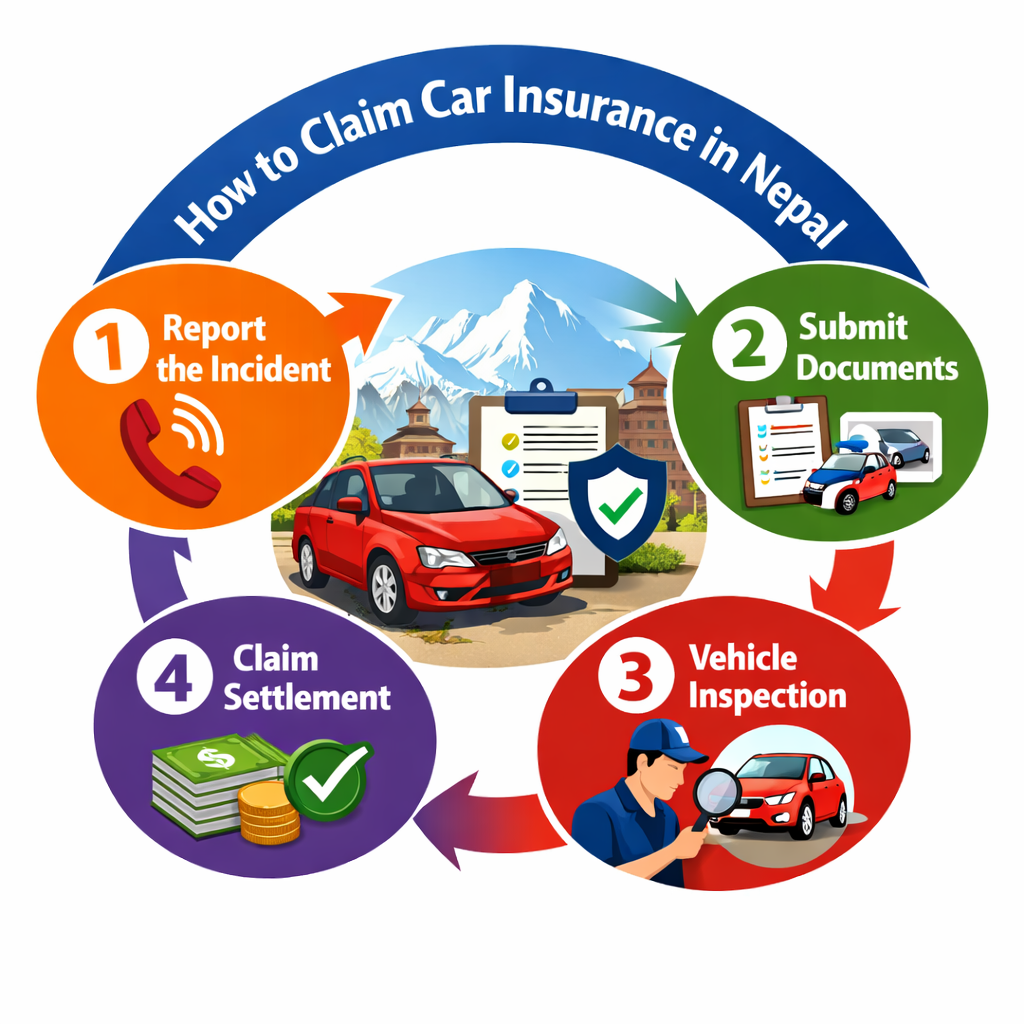
Step 1 – Report the Incident
Notify the insurer immediately after an accident, theft, or damage. Early reporting speeds up the process and minimizes the risk of claim rejection.
Step 2 – Submit Required Documents
You’ll need:
- FIR or police report (if required)
- Claim form
- Photos of damages
- Repair estimates
Providing complete documents helps the insurer process the claim efficiently.
Step 3 – Vehicle Inspection
The insurance company will send surveyors to inspect the car. Their evaluation confirms the extent of the damage, analyzes repair costs, and ensures an accurate settlement.
Step 4 – Claim Settlement
Once approved, the insurer either reimburses you or pays the policyholder or the repair workshop directly. Maintaining records of all communications ensures transparency and avoids disputes.
Comparison of Major Car Insurance Providers in Nepal
Premiums for car insurance in Nepal are calculated differently for third-party and comprehensive policies. The final price depends on the vehicle’s value, age, engine size, location, and any applicable no-claim bonus.
Pricing Basis
- Third-party = Market range from Nepal insurers
- Comprehensive = Official IDV formula (~2%–4% of car value/year)
- Final premium varies by car age, engine size, location, and NCB
Insurer Comparison Table
| Insurance Company | Policy Types | Estimated Third-Party Price (NPR / year) | Estimated Comprehensive Price (NPR / year) | Key Benefits | Online Services |
| Siddhartha Premier Insurance | Third-party & Comprehensive | NPR 3,500 – 10,000 | NPR 55,000 – 1,40,000 | Disaster cover, theft, strong claims | Yes |
| Prabhu Insurance | Third-party & Comprehensive | NPR 3,000 – 9,500 | NPR 50,000 – 1,25,000 | Competitive pricing, good support | Yes |
| Nepal Insurance Company | Liability & Comprehensive | NPR 3,200 – 9,000 | NPR 52,000 – 1,30,000 | Long-standing insurer, stable policies | Limited |
| NLG Insurance | Comprehensive & Third-party | NPR 3,500 – 10,500 | NPR 55,000 – 1,45,000 | Personal accident, roadside assist | Yes |
| Himalayan Everest Insurance | Motor insurance | NPR 3,000 – 9,000 | NPR 50,000 – 1,20,000 | Competitive premiums | Partial |
Example Pricing Breakdown (Insured Declared Value, IDV-Based)
| Car Market Value | Estimated Comprehensive Premium | Label |
| NPR 20–30 Lakhs | NPR 45,000 – 70,000 | IDV Estimate |
| NPR 30–50 Lakhs | NPR 65,000 – 1,10,000 | IDV Estimate |
| NPR 50–80 Lakhs | NPR 1,00,000 – 1,80,000 | IDV Estimate |
Conclusion
Car insurance in Nepal is not optional; it’s both a legal requirement and a form of financial protection. While third-party policies meet the minimum legal standard, comprehensive insurance provides broader coverage. It covers accidents, theft, and natural disasters that could otherwise cause major losses. Understanding coverage, premiums, and claims helps you make smarter choices.
Whether you drive daily in Kathmandu’s busy streets or hit the highway, investing in the right policy gives peace of mind, financial security, and legal compliance. Insurance is not just protection—it’s a responsible move for every driver.