Electric cars in Nepal are gaining popularity faster than ever before. Over the past few years, Nepal has shifted from a market dominated by petrol and diesel to one dominated by electric ones.
How Are Electric Cars Being Adopted in Nepal?
Electric cars in Nepal were once seen as an expensive or experimental option, but are now a practical solution for daily transportation. This transition is fueled by rising fuel prices, supportive government policies, and Nepal’s growing charging infrastructure.
As of 2026, Electric cars in Nepal have become mainstream in cities like Kathmandu, Lalitpur, and Pokhara, thanks to improved road conditions and greater charging availability. Charging an electric car is much cheaper and cleaner than using petrol/diesel. So, EVs are gradually dominating new four-wheeler imports in Nepal.
This guide explains everything you need to know before buying an electric car in Nepal.
Condition of the Current Market of Electric Cars in Nepal
The electric car market in Nepal offers a wide range of models from global and regional manufacturers. It provides options for different budgets and driving needs. Buyers can choose from compact hatchbacks, family sedans, and electric SUVs.
Some of the most popular electric cars in Nepal include:
- BYD Dolphin– Affordable, efficient, and ideal for city driving
- BYD Atto 3– Premium electric SUV with long driving range
- MG S5 EV– Stylish SUV with fast-charging support
- Tata Nexon EV– Reliable electric SUV with competitive pricing
- Tata Tigor EV– One of the most budget-friendly electric sedans
These models are popular due to their price, safety features, range, and after-sales support.
Some newly launched and upcoming electric cars in Nepal are:
- Deepal S05– Recently launched modern electric SUV from Changan’s EV brand, focusing on performance, design, and next-generation connectivity.
- Leapmotor B10– Newly introduced compact electric SUV from China, expected to offer competitive pricing and innovative tech features.
- Maruti Suzuki e-Vitara– Upcoming electric SUV expected to attract buyers seeking Maruti’s reliability and widespread service network.
Market Growth and Adoption Rate of Electric Cars in Nepal
Nepal has experienced dramatic growth in the adoption of electric cars. As of 2025-26, electric cars accounted for the largest share of EV imports into Nepal, constituting more than 70% of new four-wheeler imports. This makes Nepal one of the fastest-growing EV markets in South Asia.
Moreover, Nepal also experienced a notable rise in EV imports, nearly 10,000 vehicles in early FY 2024-25, and about 5,000 units in the first six months of FY 2025-26.
This growth is backed by various factors:
- Increasing fuel prices
- Lower import taxes on EVs
- Increasing number of charging stations
- Enhanced public awareness
Electric cars are now becoming the primary vehicles for city households.
Government Policies and EV Incentives in Nepal
The government of Nepal plays a significant role in promoting electric vehicles, imposing tax benefits, and easing registration. EVs benefit from significantly lower customs duties and excise taxes than petrol/diesel vehicles.
Tax Benefits
In the 2025-26 federal budget, the government maintains stable tax rates for electric cars. Import duties on EV charging equipment are also reduced (custom duty exemptions – 1%). These benefits are helping EVs to maintain competitive prices and encourage long-term adoption.
EV Registration and Import Rules
EVs benefit from simplified registration and lower recurring costs. Also, policy support includes preferential treatment in vehicle registration, reduces VAT on specific EV categories, and provides financial incentives for first-time buyers. The government also aims to transition a large portion of Nepal’s vehicle fleet to electric vehicles by 2030.
Charging Stations of Electric Cars in Nepal
Nepal has made significant progress in expanding its EV charging infrastructure, and continued growth is expected through 2026. Public charging stations and home charging solutions primarily support electric-car charging.
Public Charging Stations
The number of EV charging points in Nepal has been growing in recent years. At the start of 2026, more than 1,500 public charging stations were installed nationwide, with more on the way. These stations include a mix of AC and DC fast chargers, distributed along major highways and in cities.
Public charging stations are operated by:
- NEA (Nepal Electricity Authority): Operates EV charging stations and supports private sector expansion across Nepal.
- Private Companies: GadiCharge introduces high-capacity fast-charging hubs to serve multiple vehicles simultaneously, and MAW Vriddhi operates more than 100 fast EV chargers nationwide.
- Government and PPP (public-private-partnership): Expanding EV chargers along national highways and remote areas.
Home Charging
Home charging is the most convenient, cost-effective, and practical option. Most electric cars can be fully charged overnight using a standard wall charger. The cost of electricity is comparatively lower than that of petrol. Also, the subsidies and tariff incentives help reduce home charging costs. That increases the appeal of EV ownership.
For daily city driving, home charging alone is often sufficient.
Electric vs Petrol/Diesel Cars: Cost Comparison in Nepal
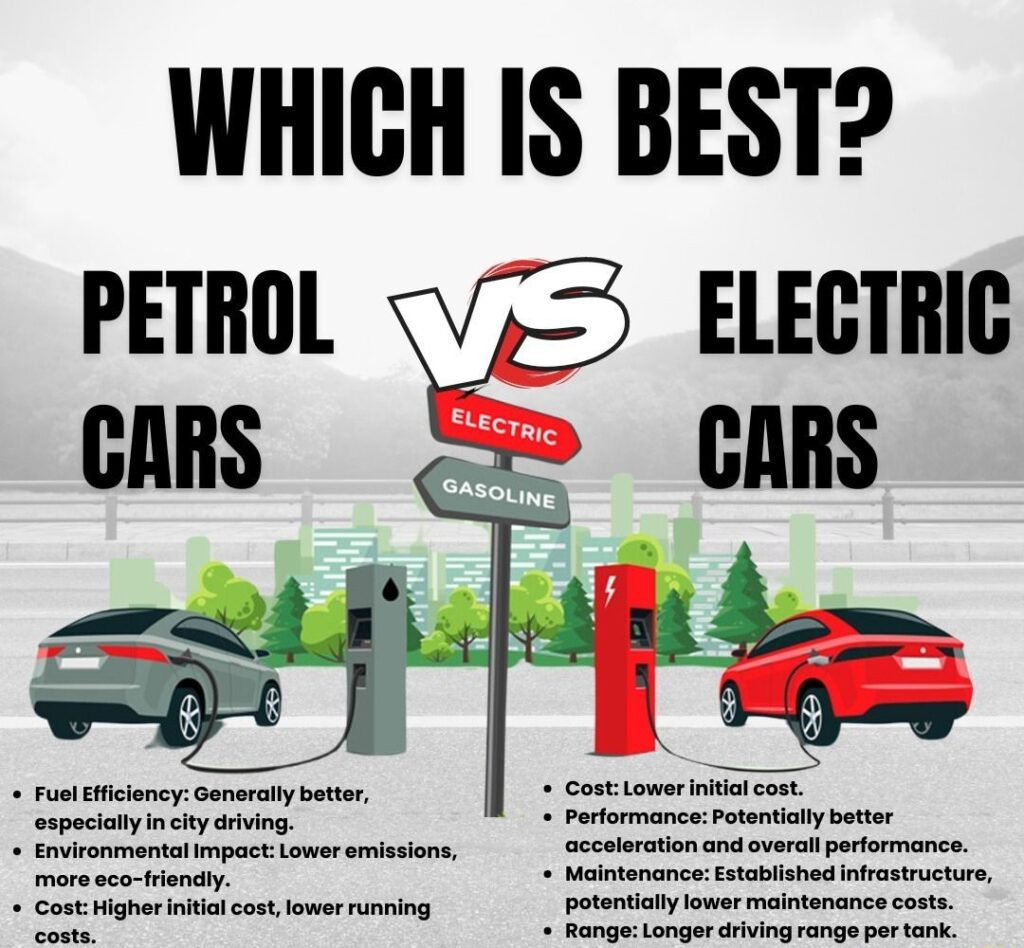
Electric cars in Nepal can vary in price, typically ranging from NPR 25 lakhs (2.5 million) to NPR 70 lakhs (7 million), depending on model, brand, and battery size. Some high-end models are expensive due to excise duties and import costs, but government tax incentives reduced the price gap.
Currently, popular models such as the Tata Tigor EV and the Donfeng Nammi E3 are the most affordable EVs on the market. These inexpensive options now compete directly with mid-range petrol cars.
Electric cars are much cheaper in the long run. Charging an electric car costs around NPR 300-400 for 150 km, while a petrol vehicle may cost over NPR 4000 for the same distance.
Maintenance costs of electric cars are also lower because they have fewer moving parts and do not require oil changes. They also came with less engine wear. Over time, this long-term cost advantage increases EV ownership.
| Cost Factor | Electric Cars in Nepal | Petrol/Diesel Cars in Nepal |
|---|---|---|
| Price Range | NPR 25-70 lakhs | NPR 20-70+ lakhs |
| Upfront Cost | Slightly higher, reduced by tax incentives | Generally, a lower initial price |
| Running Cost (150km) | Under NPR 400 (electricity) | Over NPR 4,000 (fuel) |
| Maintenance Cost | Low (no oil changes, fewer parts) | High (engine servicing, oil, wear) |
| Long-Term Cost | Much cheaper over time | Higher lifetime expenses |
Despite higher upfront prices, electric cars in Nepal are significantly cheaper to run and maintain than petrol or diesel vehicles.
Buying Guides for Electric Cars in Nepal
Before purchasing an electric car in Nepal, a buyer should not only focus on brand, design, and budget, but also consider some real-world factors:
- Driving range relative to daily and occasional long trips
- Charging station availability along the routes you use most
- Battery warranty and lifespan, including optional insurance for degradation
- After-sales service network and dealer support
- Total ownership cost balancing upfront and long-term expenses
- Test driving multiple models
- Insurance plans that cover battery and motor systems
Banks of Nepal offer EV loans, with preferential loan-to-value ratios. The financing cap in 2025 is 60% of vehicle value (LTV).
What Challenges Do Electric Car Owners Face?
The main challenges faced by electric car owners in Nepal are:
Electric Supply and Charging Limitations
Although Nepal generates clean electricity from hydropower, load shedding remains prevalent. Access to charging is limited outside major cities, and rural/hilly areas have fewer charging stations. Load shedding and peak demand periods can affect charging reliability in some regions (particularly outside major urban cities).
EV Servicing and Battery Concerns
EV service networks in Nepal are still growing and improving, but are concentrated in urban areas. That creates a lack of access to trained technicians or genuine parts in remote regions. Servicing and replacing parts or batteries is much more difficult and expensive there. So, buyers should consider replacement costs, battery warranty (usually 8 years) and established brands to reduce long-term risk.
Future of Electric Cars in Nepal
While discussing the future, Nepal plans to make EV as the dominant form of transportation by 2030. The government aims for 90% of private vehicle sales to be electric by 2030, alongside significantly increasing electric public transport. Many electric cars and buses are seen in major cities like Kathmandu.
The electric charging infrastructure is expanding nationwide, making intercity travel easier and more practical. At the same time, the government is focusing on the growth of battery recycling and the EV-related ecosystem. With better infrastructure, improved financing, and growing consumer trust, electric cars are expected to become the default choice for new vehicle buyers in Nepal.
Verdict
Electric cars in Nepal are not just an emerging trend; they are quickly becoming a more intelligent choice for transportation. Nepal’s hydropower-based electricity backs it. Also, rising fuel prices, government tax incentives, and the expansion of charging stations are making EVs more affordable and eco-friendly.
While charging and services outside major cities still need significant improvement, electric vehicles are thriving among urban and semi-urban drivers. They provide lower running costs, minimal maintenance, and a better driving experience. Overall, as policies, infrastructure, and awareness grow, electric cars are set to dominate Nepal’s roads- making now an ideal time to switch to an EV.